
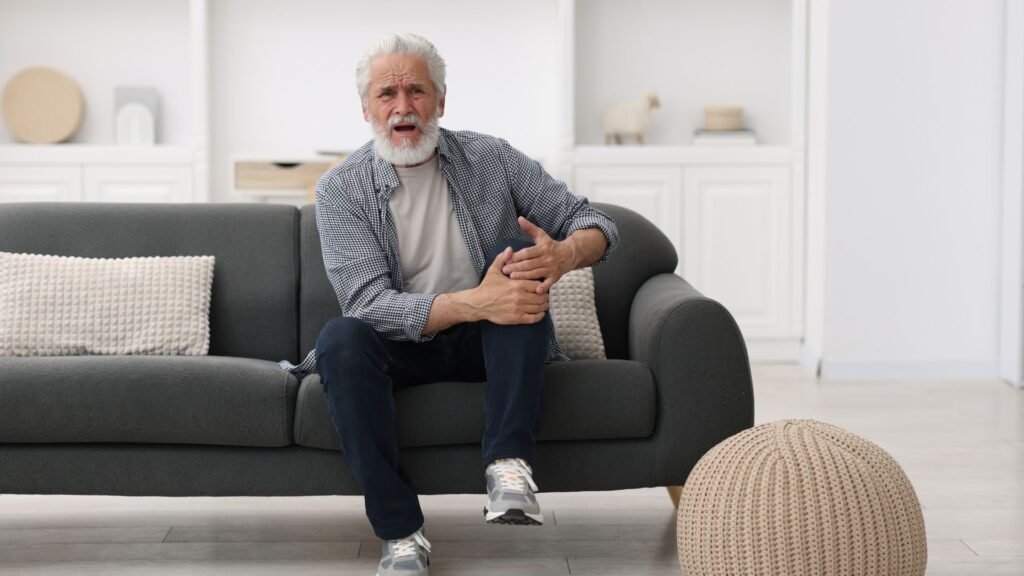
In my orthopedic clinic, I often see patients in their early 50s who sit down with a heavy sigh and tell me, “Doctor, I guess my knees have reached their expiration date.” They speak as if their joints are like brake pads on a car—destined to wear thin and eventually fail after a certain number of miles.
This brings us to the most critical question you face as you age: Is chronic knee pain an inevitable consequence of getting older, or is it a manageable condition driven by lifestyle and myths?
As a surgeon, my answer may surprise you: You have far more control over your joint health than you’ve been led to believe. Your knees are not mechanical parts; they are living, adapting bio-systems.
The “Wear and Tear” Myth
The most damaging phrase in my profession is “wear and tear.” It implies that every step you take brings you closer to a wheelchair. This is scientifically inaccurate.
Research actually shows that movement is “lotion” for your joints. Cartilage does not have its own blood supply; it relies on the mechanical “pumping” action of walking and weight-bearing to circulate synovial fluid, which delivers essential nutrients.
The Fact: A landmark study in the Journal of Orthopaedic & Sports Physical Therapy found that recreational runners actually had lower rates of knee osteoarthritis (3.5%) compared to sedentary individuals (10.2%). Inactivity, not activity, is often the primary culprit of joint decay.
The Hidden Culprits: It’s Not Just About Your Knees
Most health blogs focus on the joint itself, but as an orthopedist, I look at the systemic environment. If you are in your 50s, two “invisible” factors are likely dictating your pain levels more than the actual state of your cartilage.
1. The Metabolic Connection
We are now seeing a rise in Metabolic Osteoarthritis. High blood sugar levels create “Advanced Glycation End-products” (AGEs), which make the collagen in your cartilage brittle and prone to inflammation. If your blood sugar is poorly managed, your knees will hurt regardless of how much you rest them.
2. The Hormonal Shift (For My Female Patients)
For women navigating menopause, the drop in estrogen is a significant factor. Estrogen is “chondroprotective”—it literally protects your cartilage. When levels dip, systemic inflammation often rises. Understanding this connection allows us to treat the root cause rather than just masking the pain with ibuprofen.+1
The Psychology of the “Crunch”
“My knees sound like bubble wrap,” is a common complaint. In medical terms, we call this crepitus.
Unless that popping is accompanied by sharp pain or swelling, it is usually harmless gas bubbles or ligaments moving over bone. However, the fear of that sound often leads to Kinesiophobia (the fear of movement). When you stop moving to “protect” the joint, the supporting muscles—the quads and glutes—wither away. This leaves the knee joint unsupported, creating a self-fulfilling prophecy of pain.
How Much Control Do You Really Have?
So, how much of this is in your hands? I would argue at least 70%. While we cannot change your genetics or past injuries, you can control the three pillars of knee longevity:
- The Internal Brace: Strengthening your quadriceps and hip abductors is the closest thing to a “cure” for early-stage knee pain. These muscles act as shock absorbers, taking the load off the bone.
- Inflammation Management: By managing your metabolic health and weight, you reduce the chemical “fire” inside the joint capsule.
- Gradual Loading: You must teach your joints to handle weight again. We don’t start with a marathon; we start with targeted, low-impact resistance.
The Verdict: Aging is Not a Disease
Chronic knee pain is not a mandatory tax you pay for turning 50. While your X-rays might show some “gray hair” on the inside—what we call normal age-related changes—those images do not define your ability to hike, dance, or play with your grandchildren.
Your joints are remarkably resilient. My goal is to move you away from the “damaged goods” mindset and toward a strategy of active maintenance.
Is your knee pain stopping you from living the life you want? If you’re tired of being told it’s “just old age,” I’d like to help you find the real cause. Would you like to schedule a consultation to discuss a personalized strength and metabolic plan to get you back in motion?
Frequently Asked Questions
- Do I have to stop sitting on the floor?
Not necessarily. While deep squatting can strain an acutely inflamed knee, avoiding it entirely leads to permanent stiffness. I recommend a “use it or lose it” approach: maintain your range of motion through guided exercises so you can continue your daily rituals comfortably.
- Is walking the best exercise for me?
Walking is excellent for circulation, but it isn’t enough. I tell my patients that walking is “cardio,” while strengthening your quads is “protection.” You need a balance of both to ensure your joints are supported by strong muscles rather than just absorbing every impact.
- Can supplements like Glucosamine fix my knees?
Supplements can provide mild relief for some, but they aren’t a “cure-all.” I focus more on your Vitamin D3 and B12 levels. In India, deficiencies in these are incredibly common and often make joint pain feel much worse than the actual wear on the cartilage.
- Does a “popping” sound mean I need surgery?
No. If the popping doesn’t cause sharp pain or sudden swelling, it is usually just gas bubbles or ligaments moving. I don’t treat the sound; I treat the function. Unless your knee is “locking” or giving way, surgery is rarely the first step.
- How much does my weight really affect my pain?
Every kilogram of body weight puts nearly four kilograms of pressure on your knees when you walk. I’ve seen patients avoid surgery simply by losing 5% of their body weight. It’s the most effective way to “lighten the load” on your internal shock absorbers.